Go further · Chapter 11 · 11c · People story
Who coined "quantum supremacy" and "NISQ"?
The short answer (tap to open)
John Preskill, a theoretical physicist at Caltech, coined "quantum supremacy" in 2012 for the moment a quantum computer does something no ordinary computer can. In 2018 he coined "NISQ", noisy intermediate-scale quantum, for today's era of machines with up to a few hundred noisy qubits. Both terms shaped how the field talks about progress.
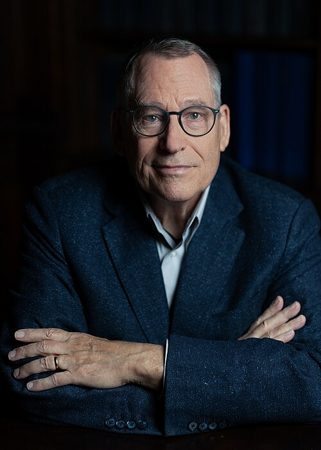

How did one physicist name two eras?
Card 1 · Caltech
John Preskill trains in particle physics and joins Caltech in 1983. In the mid-1990s, after Shor's algorithm (page 7a), he switches much of his work to quantum information and becomes one of its leading theorists, including on error correction (page 8a).
Card 2 · A famous bet
In 1997 he bets Stephen Hawking (with Kip Thorne on Hawking's side) that information isn't destroyed in black holes. In 2004 Hawking concedes and hands Preskill a baseball encyclopedia. The bet had promised one "from which information can be retrieved at will".
Card 3 · 2012: supremacy
In a talk on the "entanglement frontier" he names the moment when quantum devices do tasks beyond any ordinary computer: quantum supremacy. The phrase catches on, especially after Google's 2019 claim (chapter 11). Later, many people prefer "quantum advantage", and Preskill himself acknowledges the word's awkwardness.
Card 4 · 2018: NISQ
In a keynote he names the era we're in: noisy intermediate-scale quantum. Machines of tens to hundreds of qubits, too noisy for full error correction, but perhaps useful for some tasks. He warns that useful applications in this era are not guaranteed.
Card 5 · Since then
The field now talks about moving "beyond NISQ" towards error-corrected machines, in Preskill's own terms.
Check
One quick one
Collect
Your aha card
Two words that framed a field.
'Supremacy' named the goal; 'NISQ' named the messy middle we're in.
Next in the path · Chapter 12
How does quantum sensing work, and where is it used today?
Next in the path